Our top rigid MTB fork recommendations are the DCB R110i, R110 and R100. Choose the R110i for Boost with internal brake routing, the R110 for Boost with external routing, or the lighter R100 for a non-Boost front hub. Below them are steel, aluminum and premium carbon comparisons.
Why ride a rigid MTB fork?
A rigid fork makes a simple, low-maintenance build with no suspension service or fork bob. It also gives up suspension travel and bump absorption. Match the fork to your terrain and intended use; a rigid conversion changes how the bike rides on rough ground.
Fit comes before material. Match the front hub’s axle diameter and spacing, headset and crown race, brake mount, rotor limits, tire clearance and fork length. A 29er label alone does not establish compatibility. Ask the frame manufacturer about an appropriate rigid fork axle-to-crown length and offset; compare with the intended suspension setup at sag rather than assuming any rigid fork replaces any travel fork.
Best For
✓
Our first value choice for a Boost rigid buildInternal front-brake routing gives a cleaner appearance.
Fit / Geometry
✓
15×110mm • 485mm axle-to-crownTapered 1⅛–1½-inch steerer; 48mm offset. Axle included.
Weight
✓
Claimed 630gSeller figure; not an independent measured weight.
Tire Clearance
–
29×2.6 or 27.5×3.0 as the conservative guideThe product description contains conflicting 29-inch clearance claims. Confirm clearance for the actual wheel and tire before ordering.
Value
✓
Lowest starting price among our three DCB picksA carbon option below the premium ENVE price.
Best For
✓
Boost builds with accessible brake routingExternal hose routing simplifies brake-hose access.
Fit / Geometry
✓
15×110mm • 485mm axle-to-crownTapered 1⅛–1½-inch steerer; 48mm offset. Axle included.
Weight
✓
Claimed 630gSeller specification; build and measurement configuration may vary.
Tire Clearance
✓
Listed up to 3.0 inchesProduct lists 29er or 27.5; verify actual tire width and mud clearance.
Value / Tradeoff
–
Our external-routing Boost recommendationCurrently starts at $245; choose the less-expensive R110i if internal routing suits your build.
Best For
✓
A light rigid build using a 15×100mm front hubOur DCB recommendation for non-Boost wheels.
Fit / Geometry
✓
15×100mm • 485mm axle-to-crownTapered 1⅛–1½-inch steerer; external routing. Fork and axle included.
Weight
✓
Claimed 580gThe lightest listed DCB fork here; claimed weights are not controlled test results.
Tire Clearance
✓
29er or 27.5; listed up to 2.6 inchesConfirm clearance with your actual tire and rim combination.
Compatibility
–
Non-Boost hub requiredA 15×110mm Boost wheel does not fit this 15×100mm fork.
Best For
✓
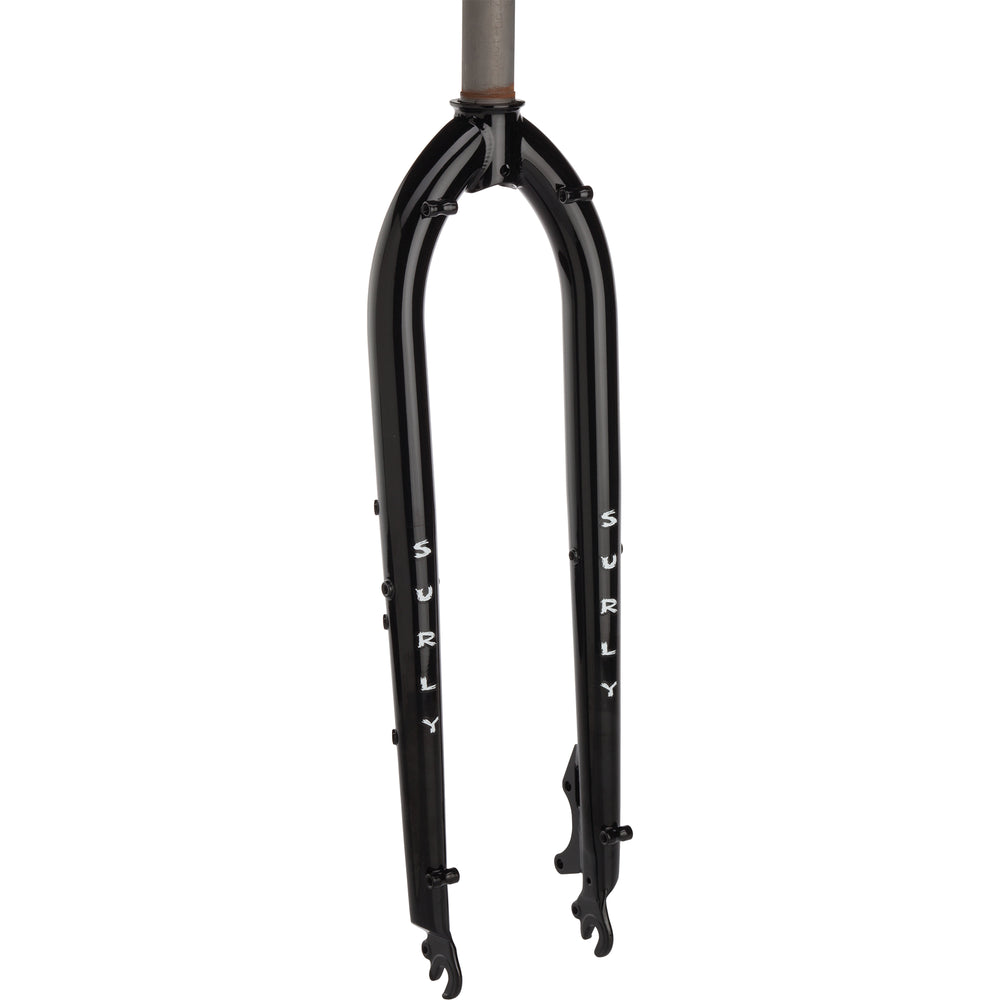
Utility and bikepacking builds needing mountsChromoly steel with Three-Pack mounts and eyelets.
Fit / Geometry
–
100mm QR • 483mm axle-to-crownStraight 1⅛-inch steerer; 47mm offset. This is the QR version, not the separate Boost thru-axle model.
Tire Clearance
✓
29×3.0 inchesCheck wheel, brake and frame compatibility before choosing it.
Weight
–
Claimed 1,133g uncutSubstantially heavier than the listed DCB carbon forks.
Value / Stock
–
Lower cost, with a weight and availability tradeoffCurrently unavailable at the linked Jenson listing; manufacturer also shows sold out online. Included as the steel comparison.
Best For
✓
A lower-cost aluminum XC comparisonAluminum steerer, legs and dropouts; post-mount disc brake design.
Fit / Geometry
–
490mm axle-to-crown • straight 1⅛-inch steerer42mm offset; 100mm dropout spacing. This is not a Boost thru-axle substitute.
Weight
–
Claimed 920gHeavier than the listed DCB carbon options.
Rider / Tire Fit
–
Recommended rider limit 97.5kg / 215lbCheck exact axle requirements, tire clearance and load limits with CarbonCycles.
Value / Stock
–
Low listed price; currently out of stockCarbonCycles lists about $128.79; check its manufacturer link below for restock. The Jenson button shows other rigid forks, not this eXotic model.
Features
✓
Adjustable offset, accessory mounts and removable fenderBoost version offers 44 or 52mm offset and 29×3.0-inch clearance.
Fit / Geometry
✓
15×110mm • 490–492mm axle-to-crownTapered steerer. Non-Boost ENVE has different geometry; do not apply these dimensions to it.
Weight
–
Claimed 676g with clasps; 719g with fenderManufacturer configurations differ from the DCB seller figures.
Brake Fit
–
Post mount • maximum 180mm rotorConfirm adapter and rotor compatibility.
Value
×
$455–$505 above the DCB starting pricesNot our value recommendation. Choose it if the adjustable offset, mounts and fender justify its premium for your build.
Which fork should you buy?
Best Boost value: DCB R110i. Its $195 starting price and internal routing make it our first choice when the fit is right. Prefer external routing? Choose the DCB R110. Using a 15×100mm hub? Choose the DCB R100. Select around your existing wheel and frame, not just the lowest weight.
The Surly steel fork favors mounts and low purchase cost, while the eXotic aluminum fork offers another lower-cost comparison; both checked listings have availability limitations. The ENVE offers useful premium features but costs far more than DCB, so it is not our value pick. DCB, ENVE and other named manufacturers are separate brands; style references on DCB listings do not imply affiliation or identical construction.
Before installation
Confirm intended-use and rider/load limits with the fork manufacturer. Check brake-mount type and maximum rotor size before moving an existing brake across. Use the correct crown race, compression hardware and installation instructions for the steerer material. Have a qualified mechanic cut and install the fork if needed. Inspect after impacts and replace damaged components before riding.